
O-Level Physics Study Tips: 3 Techniques to Lock In Before Your Paper
Part 2 of the ClearMinds Lock In Series — practical study guides for Secondary and JC students who are serious about improving their grades.
So much to study for Physics, yet so little time to study.
So much to study for Physics, yet so little time.
If that sounds familiar, you are in the right place. These O-Level Physics study tips will help you revise more effectively — even when you are tight on time. Feeling overwhelmed before your Physics paper is completely normal. However, letting that feeling stop you from starting is the real problem. Therefore, stop second-guessing your revision and lock in. Here are three study techniques that work.

Why Physics Feels So Hard to Study
Physics is unlike most other subjects. It combines abstract concepts, mathematical formulas, scientific laws, and diagram-based questions — all in the same paper.
As a result, students often do not know where to begin. They open their notes, feel lost, and end up reading passively without retaining anything.
The good news is that Physics is highly structured. Consequently, a structured approach to revision works extremely well. These three O-Level Physics study tips give you exactly that.
O-Level Physics Study Tip 1: Start with the Learning Outcomes
“I don’t know where to start.” “What am I even supposed to study?”
If this sounds like you, the fix is simpler than you think.
First, download the SEAB syllabus document for your level. Inside, you will find the learning outcomes for every chapter. These tell you exactly what your school and Cambridge expect you to know — and nothing more.
This is important for two reasons.
It eliminates wasted revision time. Without the learning outcomes, students over-study some topics and completely miss others. Furthermore, they often spend time on content that has never appeared in an exam question. The learning outcomes remove this guesswork entirely.
It tells you how to answer, not just what to know. Learning outcomes use specific command words that signal the expected format of your exam answer:
- State → Give a concise fact or law, no explanation needed
- Define → Write a precise definition using the correct Physics terminology
- Describe → Explain what happens, step by step
- Explain → Give the reason or mechanism behind an observation
- Calculate → Show your working clearly and include units in your final answer
For example, if the learning outcome says “state Newton’s Third Law”, you do not need to explain it or give examples. A clean, accurate one-sentence statement earns full marks.
In short, start every chapter by reading its learning outcomes before you revise a single page of notes. It takes five minutes and makes every hour of revision to target more.
📎 SEAB 2026 Physics Syllabus — Download Links
- GCE O-Level Pure Physics (6091): Download PDF
- GCE A-Level H1 Physics (8867): Download PDF
- GCE A-Level H2 Physics (9749): Download PDF
O-Level Physics Study Tip 2: Build a Formula and Law Sheet
“State Newton’s Third Law. Calculate the magnitude of the force exerted on the object.”
Questions like these appear in almost every Physics paper. They are also entirely predictable. Therefore, there is no reason to lose marks on them.
Physics is heavily dependent on formulas and scientific laws. As a result, the student who has every formula readily accessible has a direct advantage over the student who scrambles to recall them mid-paper.
Build a Formula and Law Sheet — one consolidated document that contains every formula, constant, and law you need for your syllabus. Keep it short, organised, and always within reach.
Here is how to make it as effective as possible.
Annotate Every Formula
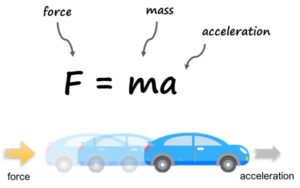
Do not just write F = ma. Annotate it.
Below the formula, write:
- F = Force (measured in Newtons, N)
- m = Mass (measured in kilograms, kg)
- a = Acceleration (measured in metres per second squared, m/s²)
This does two things. First, it reinforces your understanding of what each variable represents. Second, it prevents the extremely common mistake of substituting values in the wrong units, which costs marks even when the method is correct.
Organise by Topic
Group your formulas by chapter — Kinematics, Dynamics, Energy, Waves, Electricity, and so on. This means that when you are revising a specific topic, all relevant formulas are together on the page. Moreover, it helps you see which formulas are related — for example, how the equations for kinetic energy and work done connect under the topic of Energy.
Include the Scientific Laws
Laws are not formulas, but they are equally testable. Write out Newton’s Three Laws, Hooke’s Law, Ohm’s Law, and the Laws of Reflection and Refraction in your own words. Then check them against the syllabus to confirm accuracy.
https://energywavetheory.com/equations/fma/
Review your Formula and Law Sheet whenever you have spare time — on the bus, before class, or during a short break. As a result, you spend your focused study sessions on harder application questions rather than basic recall.
O-Level Physics Study Tip 3: Draw Your Own Diagrams
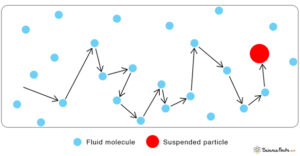
Brownian motion. Electric field lines. The refraction of light. Force diagrams. These topics deal with things that are invisible, intangible, or abstract.
Consequently, many students struggle to understand them from words alone. This is completely normal — Physics frequently describes phenomena that cannot be seen with the naked eye.
https://www.sciencefacts.net/brownian-motion.html
The solution is to give abstract concepts a visual form.
Diagrams are not just revision aids. In Physics exams, you are regularly asked to draw, label, or complete diagrams directly on the question paper. Therefore, students who have practised drawing diagrams perform significantly better on these questions than students who only read textbook diagrams passively.
Why Drawing It Yourself Makes a Difference
There is a meaningful difference between looking at a diagram and drawing one.
When you look at a diagram, you recognise it. When you draw it from memory, you understand it. The process of recreating a diagram forces you to think about the direction of arrows, the position of labels, the relationship between components, and the sequence of events.
For example, when drawing a Brownian motion diagram, you must think about:
- Why do the gas particles move in a zigzag path
- Why are larger particles pushed in random directions
- What the diagram needs to show to demonstrate random motion clearly
This active thinking is what makes the content stick — and it prepares you for diagram questions in the exam.
Diagrams to Prioritise for O-Level Physics
Here are some of the most commonly tested diagram types in O-Level Physics:
- Ray diagrams (reflection, refraction, lenses, mirrors)
- Circuit diagrams (series and parallel circuits, components)
- Force diagrams (free body diagrams, resultant forces)
- Wave diagrams (transverse and longitudinal waves, wavefronts)
- Pressure diagrams (hydraulic systems, atmospheric pressure)
For each one, practise drawing it from scratch without looking at your notes. Then compare it to the textbook version and note any differences. Repeat until your version is accurate every time.
Your Physics Revision Framework — Summarised
These O-Level Physics study tips work because they cover the three most common failure points in Physics revision: not knowing what to study, not having formulas organised, and not being able to visualise abstract concepts.
Here is the framework in three steps:
- Know what will be tested — read the SEAB learning outcomes before opening your notes for any chapter
- Build a Formula and Law Sheet — organised by topic, fully annotated, reviewed regularly
- Draw your own diagrams — from memory, repeatedly, until they are accurate without reference
Physics is not an easy subject. However, it is highly predictable. The same types of questions appear year after year. The formulas do not change. The diagrams do not change. What changes is how prepared you are to answer them confidently on exam day.
Need More Than Tips? Get Expert Physics Tuition at ClearMinds Toa Payoh
Study techniques give you direction. However, sometimes what a student truly needs is a teacher who can identify exactly where their understanding breaks down — and re-explain it in a way that finally makes sense.

At ClearMinds Education in Toa Payoh, our Physics classes are designed for both Secondary and JC students. Whether you are preparing for O-Level Physics or A-Level H2 Physics, our ex-MOE teachers provide:
- Lessons built directly around the SEAB learning outcomes
- Step-by-step worked solutions with clear formula application
- Guided diagram practice — including past paper diagram questions
- Personalised feedback on your exam answers so you understand every mark lost
- Small group classes where every question gets a real answer
Our Physics tuition at ClearMinds Toa Payoh is part of a Science tuition programme that has helped students across Toa Payoh, Braddell, and Bishan improve significantly in a single school term.
If you found the Biology study tips in Part 1 of the Lock In Series useful, the same structured approach applies to every subject we teach.
Ready to lock in your Physics grade? Book a trial class from just $5 at clearmindstuition.com.sg or WhatsApp us at +65 8388 0505.
📍 ClearMinds Education | 148 Lorong 1 Toa Payoh, #01-903, Singapore 310148 Near Toa Payoh MRT and Braddell MRT 🌐 clearmindstuition.com.sg | 📞 +65 8388 0505